

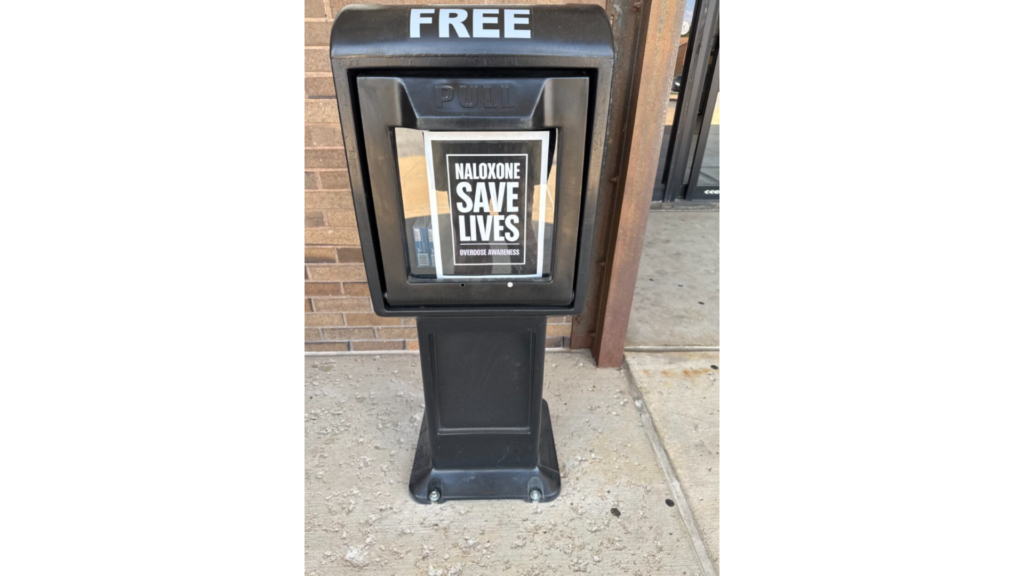
Affinia Healthcare expands distribution of Naloxone, vending machines available at each health center
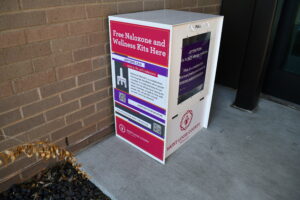 Affinia Healthcare continues to distribute and provide awareness about Naloxone, a medication used to quickly reverse an opioid overdose. The medication, also commonly known as Narcan, is available at all health centers for free, and is now also available in a vending machine outside of the health centers.
“We’ve always had this medication readily available at our health centers for free but with the vending machines people are now able to grab the medication on their own without coming into the building,” said Affinia Healthcare Director of Pharmacy Kenyatta Johnson. “This allows a person to get what they need without even having to enter the building – with no questions asked.”
In partnership with the St. Louis County Health Department, the first vending machine was installed earlier this year at the Ferguson Health Center. Thanks to a collaboration with the University of Missouri-St. Louis Missouri Institute of Mental Health Addiction Science Team, additional dispensers are now located at the other health centers: 1717 Biddle Street, 4414 North Florissant, 2220 Lemp Avenue and 3930 South Broadway.
“Unfortunately, the opioid epidemic is a crisis in our community,” said Affinia Healthcare President and CEO Dr. Kendra Holmes. “Affinia Healthcare continues to provide educational resources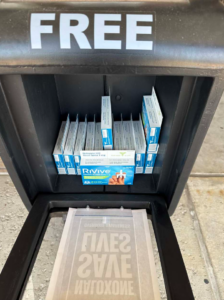 and treatment for those impacted by this epidemic.”
The vending machines are stocked, and the expiration dates are monitored on a regular basis. Overstocking of Naloxone is avoided during periods of extreme temperatures.
In addition to providing free Narcan, Affinia Healthcare provides substance use disorder (SUD) treatment with individualized patient care. Some of the services include individual counseling, patient care/case management, medical primary care visits, and other services.
“Substance use disorder is treatable and access to timely, compassionate treatment can make a meaningful difference in a person’s life,” said Holmes. “We’re not only providing treatment services, but we’re creating opportunities for individuals to receive support, pursue recovery and improve their overall well-being.”